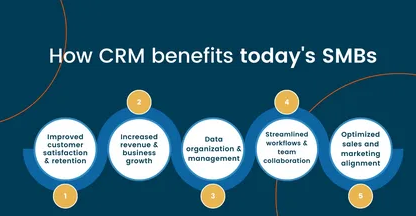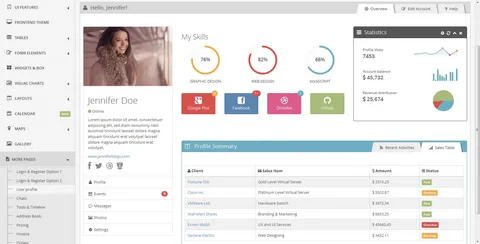

You’ve heard it: “Just add the CRM module to Business Central!”
Sounds logical—if your CRM needs are light and your team lives entirely inside Dynamics.
But here’s what the brochures don’t say:
The native “Relationship Management” feature in Microsoft Dynamics 365 Business Central isn’t a true CRM. It’s a lightweight contact log—designed for transactional follow-ups (e.g., “Call customer about overdue invoice”), not relationship-driven growth.
For many growing businesses—especially those in professional services, trading, or project-based industries—that gap is getting harder to ignore.
Let’s compare what’s really possible.
⚖️ Business Central’s “CRM”: Capable, But Narrow
✅ Pros:
- Tight financial sync (invoices, payments, credit limits)
- Basic contact + opportunity tracking
- Good for inside sales teams managing high-volume, low-touch accounts
❌ Limitations:
- No visual sales pipeline or drag-and-drop stages
- Minimal automation (no triggers based on behavior or time)
- No built-in meeting tools—Zoom/Teams must be managed separately
- Poor support for project linkage (e.g., “Deal won → Start delivery project”)
- Steep learning curve for non-finance users (project managers, marketers, client leads)
Result? Many teams end up using Excel or a separate CRM anyway—defeating the purpose of integration.
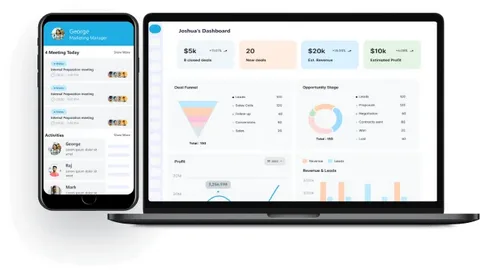
🔄 The Real Need: CRM That Talks to Your Financials—Without Living Inside Them
You don’t need CRM inside Business Central.
You need CRM that respects your financial system—and complements it.
That’s where platforms like WORKESK offer a smarter hybrid approach:
- Keep Business Central for GL, inventory, and core accounting
- Use WORKESK as your CRM system, project management tool, and team collaboration software
- Sync key data bi-directionally:
→ New client in WORKESK? Push to BC as Customer
→ Invoice paid in BC? Update client status in WORKESK
→ Project budget vs. actuals? Pull financials for reporting
No API nightmares. WORKESK offers native BC connectors—or lightweight middleware (like Power Automate or Zapier) for controlled, low-maintenance sync.
🛠️ Where WORKESK Adds What Business Central Can’t
For growth-focused teams, WORKESK delivers the missing layers:
- Visual, customizable sales pipelines—with stages like “NDA Signed,” “CIM Sent,” “LOI Review” (critical for brokers, consultants, exporters)
- Zoom integration—calls logged, transcribed, and attached to client profiles
- Biolinks—personalized client hubs for reps (e.g., yourfirm.com/ali) with calendar, projects, and secure doc links
- Workflow automation—e.g., “When project marked ‘Complete’ → generate e-invoice in WORKESK → push to BC for AR”
- Office management software features: leave tracking, asset logs, announcements—so ops run smoothly alongside finance
It’s not about replacing Business Central. It’s about freeing it to do what it does best—while giving your front-office teams the tools they actually need.

The bottom line?
If your business runs on deep client relationships, project delivery, and cross-functional teamwork—not just order entry—a standalone CRM like WORKESK often delivers more real-world value than forcing everything into Business Central’s limited RM module.
You get financial integrity and growth agility—without compromise.
👉 Want to see how WORKESK integrates cleanly with Business Central—without custom development?
Explore integration options and live demos: workesk.com
Our team specializes in hybrid ERP/CRM setups: support@workesk.com